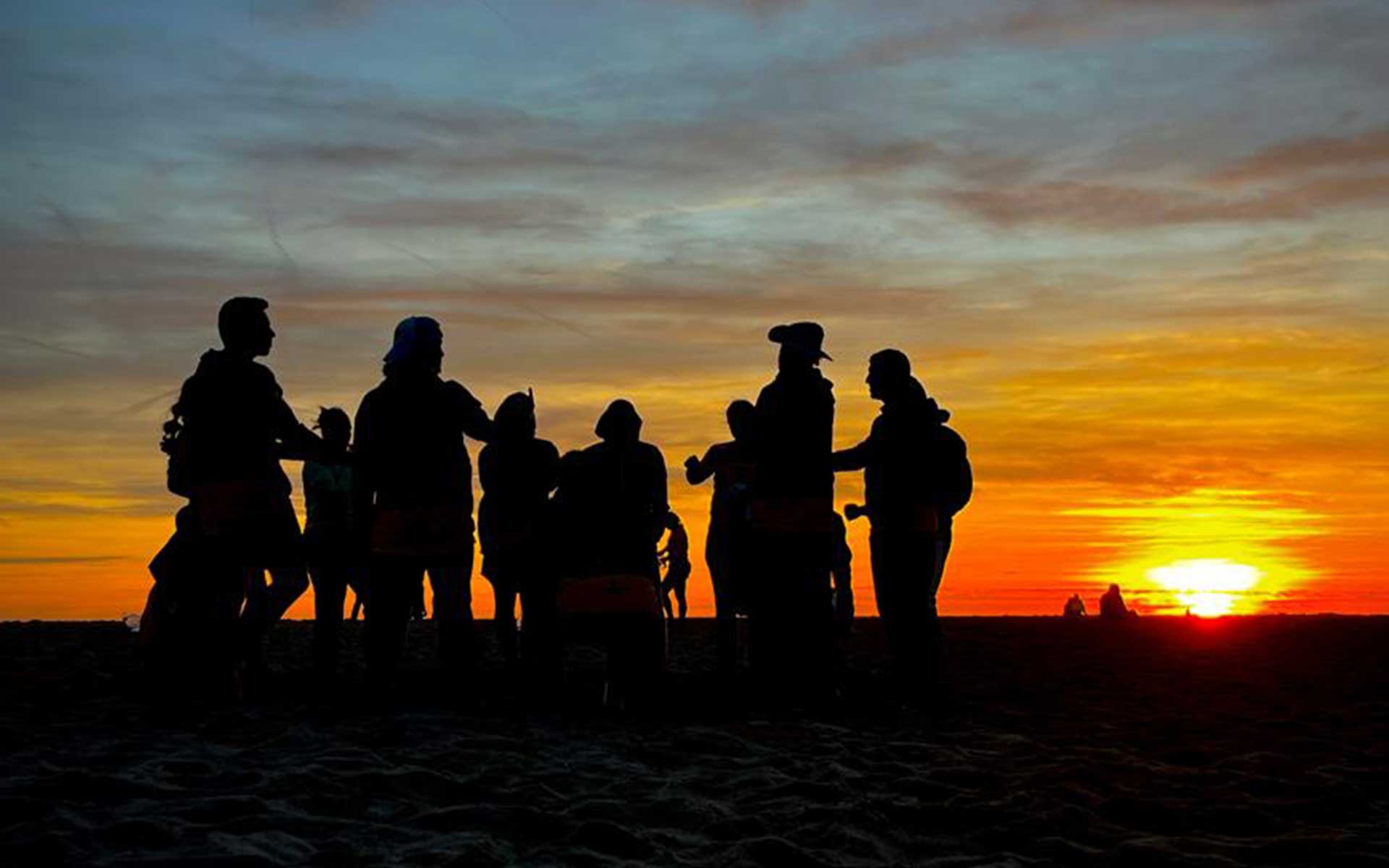
Some teams form like cheap furniture: fast, with confusing instructions and leftover screws. And then there's Disckatus, which looks more like an urban garden: slow, collective, imperfect… but alive.

Some teams form like cheap furniture: fast, with confusing instructions and leftover screws. And then there's Disckatus, which looks more like an urban garden: slow, collective, imperfect… but alive.
Because in ultimate frisbee—that sport without referees where ethics weighs as much as your legs—identity isn't a logo or a jersey. It's a way of being in the world. And that, curiously, is also trained.
Tom Banister-Fletcher explains it from sports psychology: a strong identity isn't declared, it's practiced. It's communicated, structured, shared outward, and above all, evaluated. What's fascinating is that Disckatus has been doing this for years without giving it an academic name. Like someone who learns to swim before knowing what buoyancy is.
At Disckatus we don't shout our values. We let them fall, like well-thrown discs. They're in how we talk during training ("nice support there", "thanks for stopping play"), in what we celebrate and what we don't. Here we applaud both an impossible layout and someone who comes back after weeks away. Pure contrast: performance without elitism, demand without contempt.
Social media, the web, WhatsApp messages… it all communicates. Not just spectacular plays, but tired faces, awkward laughs, improvised after-parties. Because our identity isn't looking perfect, it's looking real.
And the jersey—ah, the jersey—doesn't say "we're the best", it says something more dangerous: we're us. And that means taking responsibility.
Some teams train systems. Disckatus trains relationships. Yes, we run. Yes, we sweat. But we also learn to listen, to rotate roles, to accept that today isn't your day and tomorrow maybe it is. The team's structure—mixed, open, without rigid hierarchies—isn't chance: it's coherence.
Rituals matter. Arriving early. Greeting everyone. Closing training together. Not because "that's how it's always been done", but because that reinforces who we are. Like the gnome that traveled with that team Banister-Fletcher talks about, here symbols are small but constant. No shiny trophies, but shared memories.
And when something changes, there's no need to justify it with authority. A simple phrase suffices: "this fits better with Disckatus". And it's usually true.
Disckatus doesn't end at Orcasur. It seeps out. In people who bring friends "to try it". In those who discover ultimate as a judgment-free entry into sport. In the constant emphasis on inclusion, gender equity, and respect as the norm, not the exception.
Because an identity that isn't shared withers. And a community that doesn't open becomes a private club. The exact opposite of what we are.
Subtle irony: the more we give, the stronger we play.
Here not everything comes down to winning or losing. Although, of course, winning feels good. But when the season ends, the questions are different:
Psychology confirms it: teams with a positive identity are more resilient. What the article doesn't say—but you feel in your body—is that they're also happier. And that, in a world obsessed with results, is almost revolutionary.
Disckatus isn't a team that has values. It's a team that lives within them. Like a river that doesn't need to explain itself while flowing.
In ultimate frisbee there's much talk of the "Spirit of the Game". At Disckatus that spirit doesn't float in the abstract: it runs, it fails, it throws again. It's built training by training, person by person.
And maybe that's the secret: not aspiring to be the best team in the world, but the best team to be in the world.


